When Engines Suffer and Agendas Run Smooth: The E20 Story
By Shaswat Ravi
3/10/20266 min read
"The impact of E20 petrol is likely to be significantly greater and more severe for Indians than a 50% tariff on Indian goods imposed by Trump.”
~M. Nageswara Rao (Retired IPS Officer and Social Media Commentator)
In a country where over 60% of vehicles remain incompatible with higher ethanol blends, how can policymakers justify the abrupt and mandatory rollout of E20 without phased options or subsidies for upgrades? Is it an elixir for our cars and pockets? Or just a propaganda by our central government for political gains?
The energy demand in our country is increasing rapidly due to an increase in population and rapid urbanisation. Urbanisation involves motor vehicles, which require fuel, and India is not at a stage where it can sustain itself. Today, India imports 85% of its oil requirements. The Indian economy is expected to grow steadily despite the COVID setback. This means our vehicular population will also definitely increase in the near future, directly affecting the demand for transportation fuel.
What exactly does E20 mean?
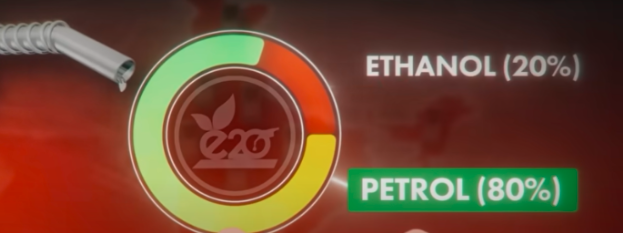
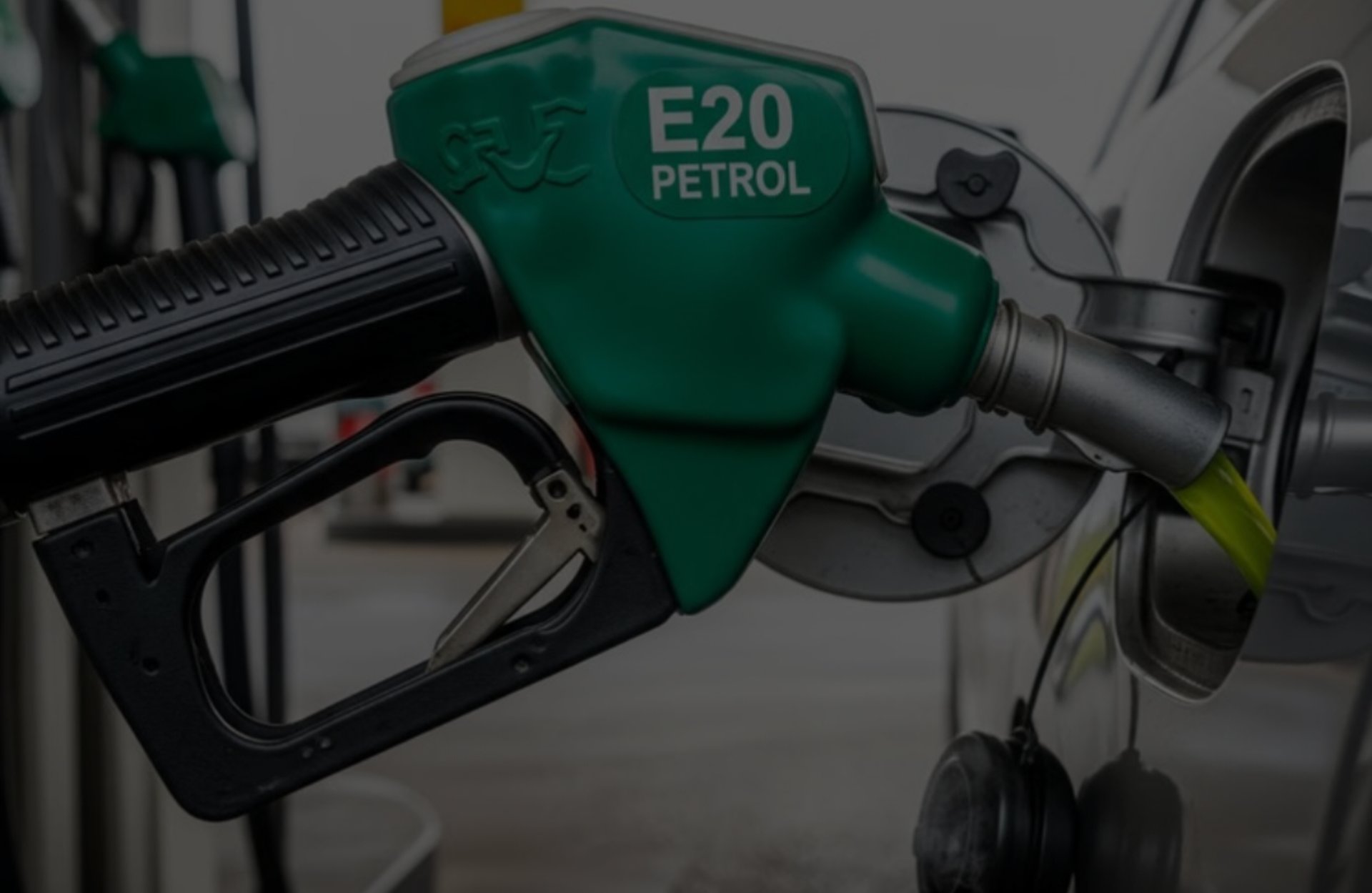
E20 means blending 20% ethanol with 80% petrol.Ethanol is one of the principal biofuels, which is naturally produced by the fermentation of sugars by yeasts or via other petrochemical processes. Sugarcane, maize, and rice are the crops that are prominently used for making alcohol for processing and as a biofuel. Sugarcane has the highest sugar yield per acre, so it is the best for ethanol production, and on top of that, sugarcane is widely grown in India, which makes it a great source of production. It benefits the Indian farmers as companies making E20 petrol will buy these crops from the farmers, and the BJP has also claimed that Indian farmers have made an extra revenue of 1.18 lakh crore rupees as claimed by Indian Sugar & Bio-energy Manufacturers Association (ISMA) and the Ministry of Petroleum and Natural Gas in July and August 2025, as a key achievement of India's ethanol blending program.
E20 Timeline: What was the need to aburptly come up with E20?g in 2025?
It’s not like E20 is essentially bad; many countries have successfully implemented mixing 12-22.5% of ethanol in their fuel, but the main difference between them and us is that they did it over a course of 10-20 years, and we did it so abruptly that it would not be wrong to say it was a helpful but poorly executed policy.
Mr Nitin Gadkari said petrol will be 15 rupees per litre if they incorporate 40% ethanol and 60% electricity. Well, if that happens realistically, it would need at least 10-20 more years from now.
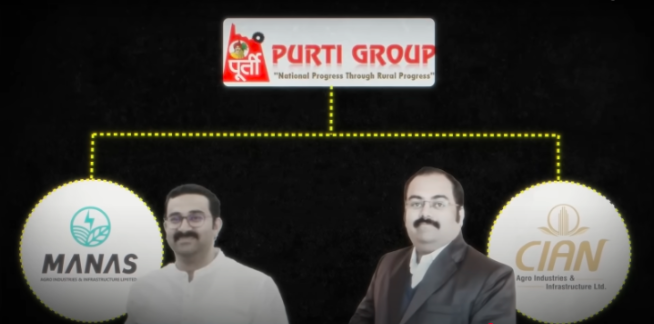
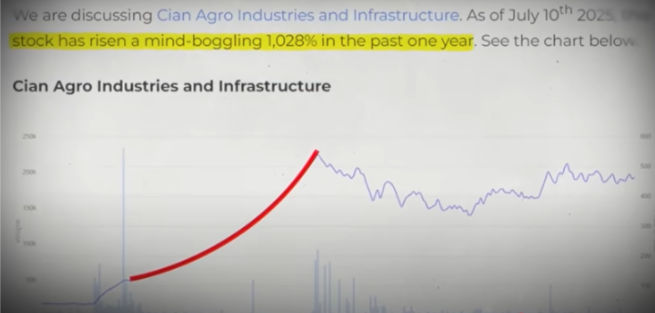
Gadkari family has also been accused of benefitting personally from this policy as in Maharashtra, Gadkari family’s Purti Power and Sugar ltd is making good money off this policy after 2014 when BJP allowed 10% ethanol blending which flourished Purti group’s business, later in June 2014 Mr Gadkari also announced installation of one more plant, later Purti group had two subsidiaries MANAS Agro industries and CIAN Agro industries which is run by his two sons Mr Sarang Gadkari and Mr Nikhil Gadkari. Both of these companies are heavily invested in the E20 project. As of 2022, the MANAS group was making 2 crore litres of ethanol to be blended in fuel, and CIAN, in 2024, signed a MoU with the Ram Charan group for making ethanol using CO2.
Current Situation
There is no doubt that the intention behind E20 fuel was indeed very good, which benefits local farmers and would reduce the price of petrol prices in India, but even after E20 petrol, prices have not dropped; this gain should be for the consumers to be dealt with.
Ethanol has a substantially high water content, which means it takes more time and energy for a car engine to burn the fuel. Ethanol has a higher burning point than petrol, but customers are paying the same price for less value!
In winters and in high altitude areas, vehicles may even face that their cars and bikes not picking up the spark of their engine. Rusting of motor vehicle parts is also a major issue. The government says some outdated parts shall be replaced for a minimal cost, but these costs are not minimal and are not feasible for a middle-class Indian to be able to afford.
Way Ahead
By the time major issues arise in vehicles, it will be too late to recover those vehicles. The government would have changed, electric cars would have taken over, etc.
So what are the possible solutions for the government and us, as people of India? Let’s see what we can do first, then we’ll shed some light on the betterment of the policy.
There is no such alternative that we have, so if your car is manufactured before 2023, the only thing we can do to drive it risk-free is to replace the fuel components with ethanol-compliant material so that it doesn’t physically damage our car.
Now, let’s propose some realistic solutions for the higher authorities:
Move from 1G to 2G ethanol – 1G ethanol is made from crops like sugarcane, rice, etc., whereas the 2G ethanol is made from agricultural waste like straw, husk, and stalks. This makes sense as 2G ethanol ingredients do not compete in the food supply and use the waste, which otherwise would have been burnt and caused even more damage to us. And if this 2G method is actually implemented, petrol prices could go as low as 30 rupees per litre, that is, of course, when the government reduces taxes.
Second would be government should give us an option of E0, E10, and E20 petrol, in which we will be able to use whichever fuel supports our vehicle; otherwise, the vast majority of the population will have to suffer.
Last but most importantly, no matter which policy the government implements, it has to work hand in hand with the whole ecosystem, from suppliers to insurance companies, to producers, to manufacturers, etc. So that the policy actually benefits the country and does not backfire, at the end of the day, the central government has noble intentions; they want to make the farmers prosperous, they want to reduce the dependence on foreign oil, and solve the issue of climate change.
So when good intentions partner up with poor execution, something like this happens!
Is E20 petrol a scam?
No, it is just a hasty solution for a time-consuming problem. The government needs to take it seriously now, or else the trust they have gained over the last decade would be shattered in no time, and once that is gone, our country would need a new party to take the throne of our prosperity.
Is E20 petrol an elixir?
In India, 98% of transportation fuel is used by burning fossil fuels, and the remaining 2% is biofuel. So as to come up with an environment-friendly and local farmer-friendly approach, the central government came up with the somewhat crazy implementation of E20 fuel.
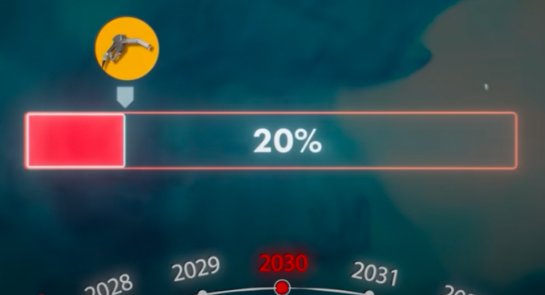
India started blending ethanol in petrol in January 2003 with a target of 5% but till 2014 the results were rather disappointing, with only 0.1-1.5% ethanol blended. That’s when the BJP came into the picture and raised the cap to 10% by 2018 and aimed to achieve 20% i.e., E20 petrol by 2030. Later, this deadline was preponed to 2025, and in March 2025, the BJP achieved this target, but at what cost? As soon as E20 petrol was used by Indians, complaints started erupting over the internet and our honourable Road Transport and Highway Minister, Mr. Nitin Gadkari ji, termed it as “Opposition party-oriented false narrative”. But all of us can see the posts regarding dropped mileage and costs of replacing pre-existing car and bike components. The transition that Brazil did in 50 years, India did it in 5 years, and that too with poor infrastructure.
Companies’ issued manuals clearly stated that cars manufactured before 2023 are not E20 compliant, and most of the insurance companies also clarified that they will not cover the damages of E20 petrol in our cars.
These are real problems!!
Another side of the Indian bureaucracy