
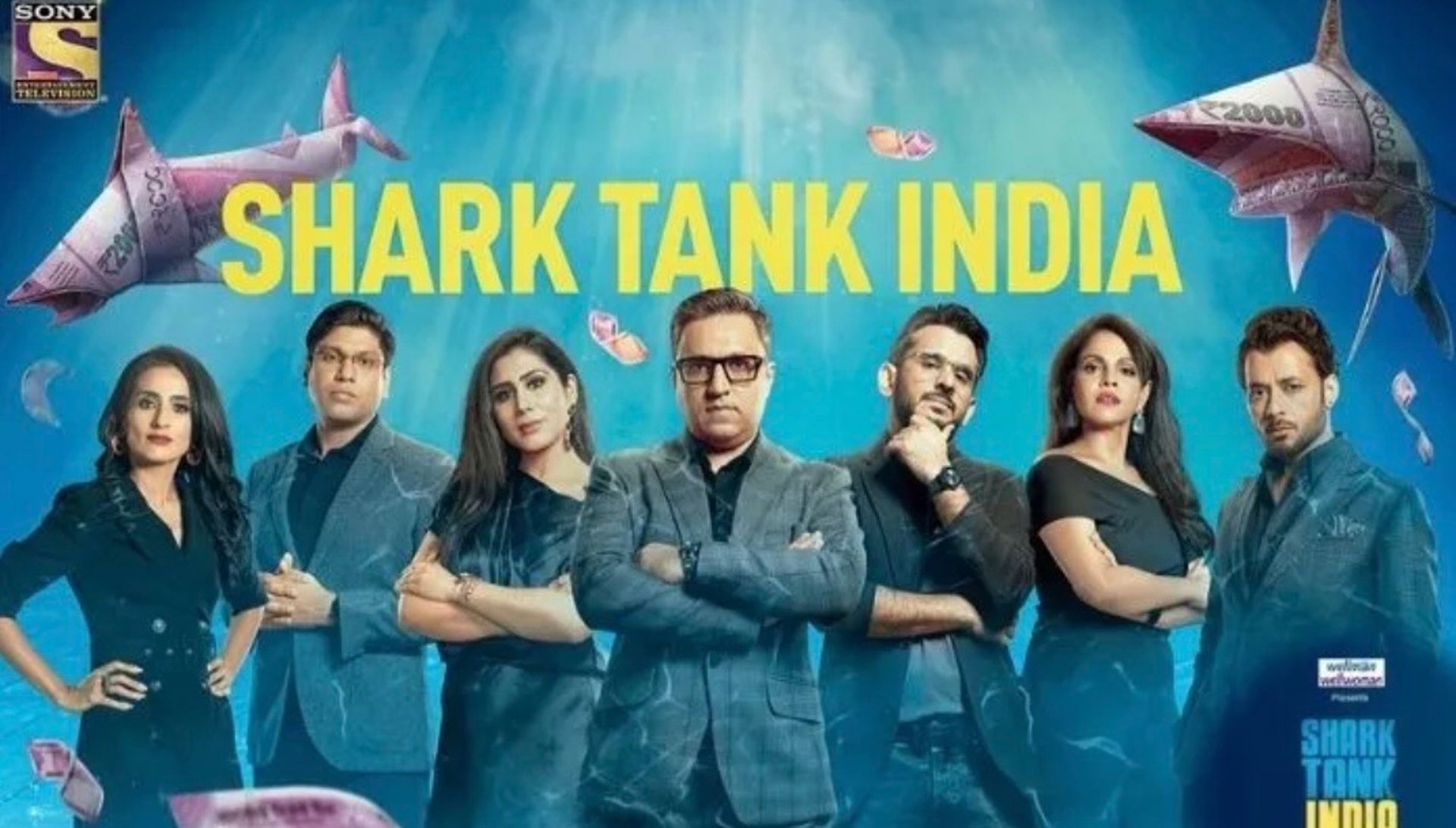
THE SHARK TANK EFFECT
BY NUPUR BISHT
1/10/2026
“Don't intimidate me like that.”
I am positive that most of you have heard this line, but who said it, and where is it from?
It was Priyasha Saluja, founder of the Cinnamon Kitchen, on Shark Tank India.
Shark Tank has taken India by storm, penetrating its way into every household possible.
It is not just a show but rather a classroom for financial literacy, a space for businesses to grow, a face for the founders, and a cultural shift redefining India’s aspiration. From dinner table conversations about equity and market share to a change in India’s role models, the ‘Shark Tank effect’ is bigger than any pitch.
WHEN THE SHARKS SWAM TO INDIA
When Shark Tank India premiered on Sony Entertainment Television in December 2021, nobody could have predicted the cultural phenomenon it would become.
Inspired by the globally successful American format, which first aired on ABC on August 9, 2009, it turned the prime-time television game upside–down. Suddenly, mainstream entertainment was not just about the drama of daily soaps, repetitive dance moves, or singing contests; it was about founders walking in with ideas, prototypes, and valuation numbers with dreams of scaling masses.
Its meteoric rise can be attributed to the fact that it’s not just a show but a movement for real-world financial literacy, which sparked innovation and initiative among the audience, inspiring them to step out of their comfort zones and take a leap.
For generations, the dominating Indian dream, particularly for the middle class, was just to have a stable and secure source of income. Entrepreneurship was widely viewed as a high-risk, unstable path reserved for those with family wealth, but this show revolutionized that perception.
From small-town inventors to urban tech enthusiasts, Shark Tank gave a platform not just to businesses but also to a wide spectrum of business owners to put forth their stories. This is what turned it into a nationwide sensation
ENTREPRENEURS TO ICONS
Everyone knew the brands, but nobody knew the brains behind them, up until now.
The spotlight shifted, and the sharks now owned the centre stage.
The magic of Shark Tank India is not just limited to its creative pitches but also in the powerhouse panel that evaluates them. Each shark has a distinct persona and a unique energy that they bring to the show, which makes it all the more interesting.
Ashneer Grover took the first season by storm with his unfiltered and unapologetic personality, cutting through the pretence, and his brutally honest comments made the entrepreneurs squirm. It was uncomfortable yet felt like a breath of fresh air in contrast to the sugar-coated world of television.
Where Ashneer intimidated, Aman Gupta embraced and took the role of the warm elder brother in the show, being approachable and creating a collaborative space.
Anupam Mittal painted the show with his philosophical musings and witty insights. He invested in stories, not just numbers on a balance sheet.
Namita “I’m out” Thapar inspired multiple memes, but she also became caution personified, teaching us the importance of taking every decision with utmost precautions.
KVineeta Singh made the entrepreneurs question whether they had truly earned their place; she assessed devotion and discipline.
Peyush Bansal identified the weak spots with his eagle-eye vision and added a touch of friendly competitiveness in the show.
As seasons evolved, new sharks stepped in, and the panel became the heart of the show.
In a way, they became celebrities, building a personal brand bigger than many businesses they’ve funded.
When youngsters stepped into the picture to establish a change in their role models, that is when the "Shark Tank effect" began, reshaping India in ways that extended far beyond the television screen.
NISH HAIR: A DEEP DIVE
When actor-turned-entrepreneur Parul Gulati launched Nish Hair in 2017, it was a result of experiencing a lack of reliable, premium-quality hair extensions in the Indian market.
Noticing women struggle with thinning hair and widening hairlines, she came up with an accessible solution in the form of her business, ‘Nish Hair’, offering real human hair extensions, hair toppers, clip-in extensions, and wigs, not just as a fashion accessory but as a confidence-booster for many.
The ‘Malkin’ entered the tank asking for ₹1 crore in exchange for 2% equity, valuing her company at ₹50 crore. While several sharks showed interest, Amit Jain was the one who closed the deal on her exact ask. For a high-value, sensitive product like human hair extensions, customer trust is paramount. Being backed by a shark acted as a stamp of approval, assuring the potential customers of the brand’s quality and legitimacy.
This investment was just the beginning, for what followed was the true “Shark Tank effect”. Suddenly, Nish Hair’s name was everywhere—memes, reels, and headlines. Sales experienced a massive jump, and the company was constantly in the talks. Post-show, the brand received significant media coverage in major business publications and lifestyle magazines, an outcome that would typically require a substantial marketing budget to achieve.
The takeaway is clear: a founder’s story on the right platform acts as the most effective marketing tool.
TRIALS AND TRIUMPHS
While Shark Tank India has been widely recognised and appreciated, it has not managed to escape criticism.
As the final cut makes for engaging content, it often leaves out detailed negotiations and due diligence, creating a somewhat glamorised image of fundraising. As a result, viewers may walk away believing that securing investment is simpler than it truly is.
Post-show performance of some businesses has also sparked some debate as they struggle to sustain momentum and even face consumer backlash at some point.
Critics point out that the show occasionally sidelines substance in favour of entertainment, which raises a larger question: Can Shark Tank India balance its dual identity as both prime-time entertainment and a credible platform representing entrepreneurship?
While the answer to this question is uncertain, what is definitely certain and scalable is the impact that this show has created across India. It has successfully and evidently inspired millions, marking the beginning of a new chapter in India’s entrepreneurial landscape.
It sends one clear message to every aspiring individual: you don’t need a fancy degree or generational wealth being handed down to you to build your dream. All you need is an idea, unwavering belief, and the courage to step into the tank.