
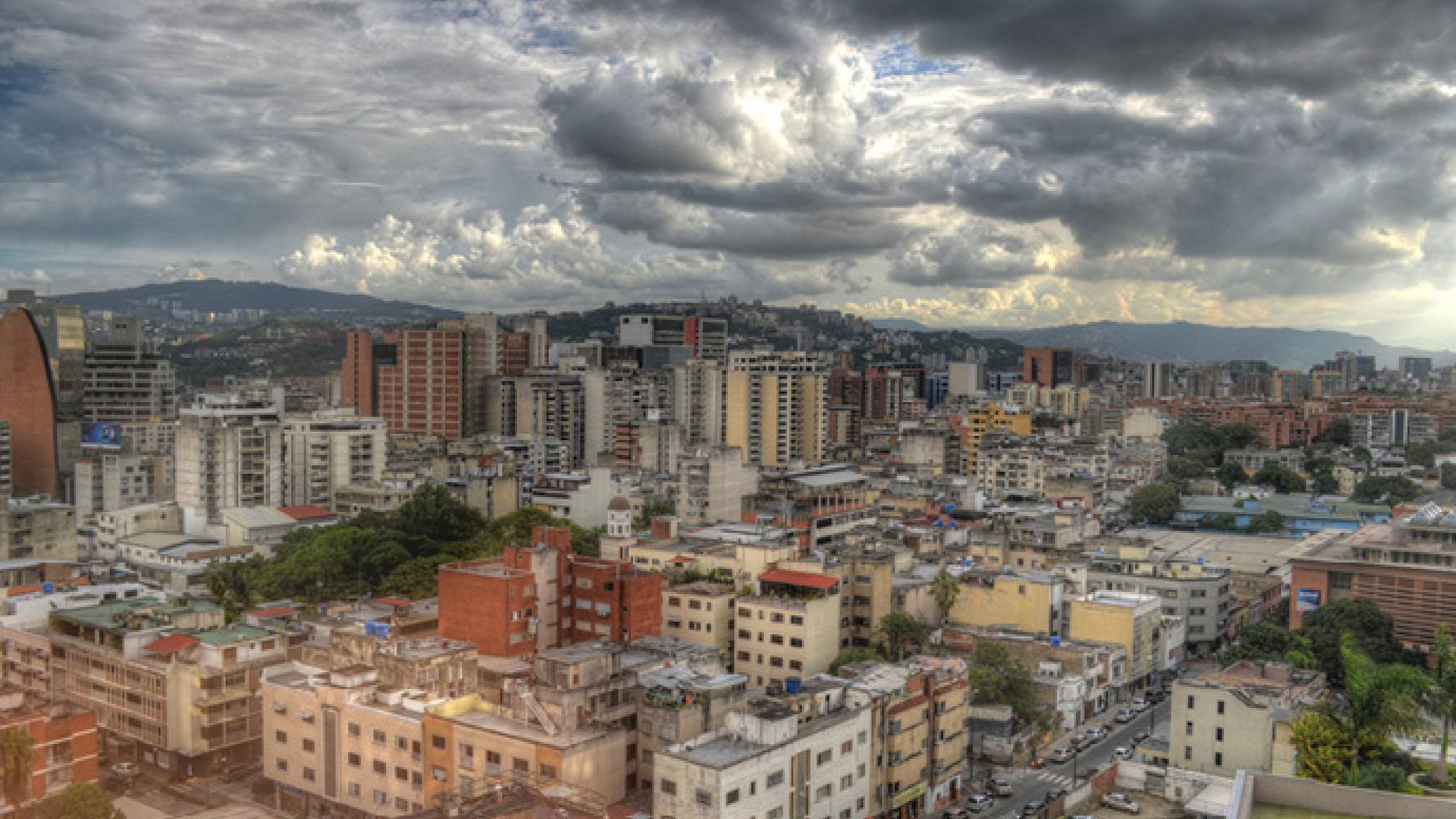
From Boom to Bankruptcy: How Venezuela Slipped into a Debt Trap
By Rajdeep Kundu
2/10/20266 min read
“Once the wealthiest country in Latin America, Venezuela now faces one of the worst economic collapses in modern history.”
How did vast oil wealth turn into crippling debt?
INTRODUCTION: THE PARADOX OF PLENTY
For decades, Venezuela’s vast oil reserves financed social programs, subsidies, political ambitions and ran the country , but behind this supposed prosperity lay a dangerous instability: an economy run by a single volatile commodity and a government reliant on borrowing to sustain it.
The concept of a debt trap, where countries borrow excessively to repay existing loans and debts, creating a never ending loop, is central to understanding Venezuela’s downfall. By the time oil prices collapsed in 2014, the nation had already staked its future. One of the worst financial crises in contemporary history ensued, accompanied by social disintegration, mass migration, and hyperinflation. Let’s understand this downfall further in the upcoming sections.
The debt crisis in Venezuela did not happen overnight or as an inevitability. It was the product of a substantive series of policy mistakes, politically expedient short-term decisions, and economic mismanagement. Despite sitting on the world's largest proven oil reserves, today, the country suffers from one of the most extreme economic collapses seen in history.
Debt itself is not a bad thing, responsibly managed debt can finance growth, infrastructure, and development. The dangerous part is mismanaging borrowed funds, lack of fiscal responsibility, and failure to engender a resilient economic structure. Venezuela’s wealth of natural resources could have been its greatest strength, instead, it serves as a reminder that prudent governance is the true currency of a nation’s future.
For these emerging markets, the lessons are strong; resource wealth is a huge opportunity, but does not replace the need for prudent governance, economic diversification, or sustainable fiscal policies. Prioritizing the latter can allow countries to position potential vulnerability into benefits instead, avoiding Venezuela's errors and expensive consequences.
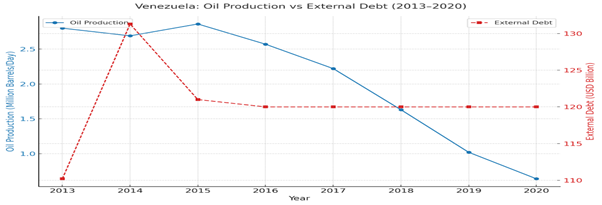
Venezuela’s oil production vs. external debt (2013–2020)
Source: IMF
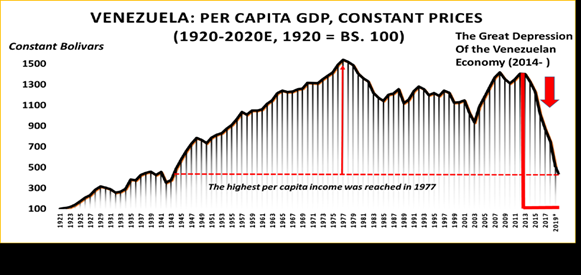
Per capita GDP (Venezuela, 1920-2020), ResearchGate
ICARUS: RISE TO GLORY
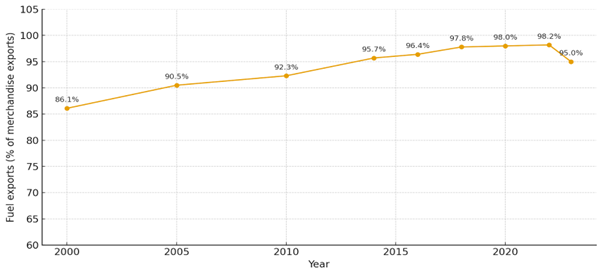
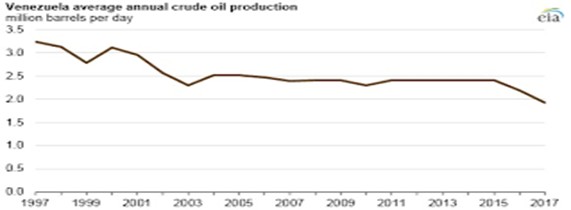
Venezuela rose to power due to oil. From the mid-20th century onward, the national oil company PDVSA (Petróleos de Venezuela, S.A.) turned the country into a petrostate. By the early 2000s, oil exports accounted for more than 90% of Venezuela's total revenue. Oil dependency provided a facade of stability. When oil prices reached over $100 per barrel, the government borrowed money with the belief that this could grow indefinitely.
Hugo Chávez, the 45th President of Venezuela, leveraged oil revenues to fund broad social programs that effectively addressed poverty and inequality in the short term. However, exacerbating this success was a lack of diversification, as agriculture and manufacturing were both neglected, and the economy suffered from Dutch Disease, an economic phenomenon where a country's currency appreciation from a boom in one sector, typically natural resources, causes a decline in other sectors like manufacturing.
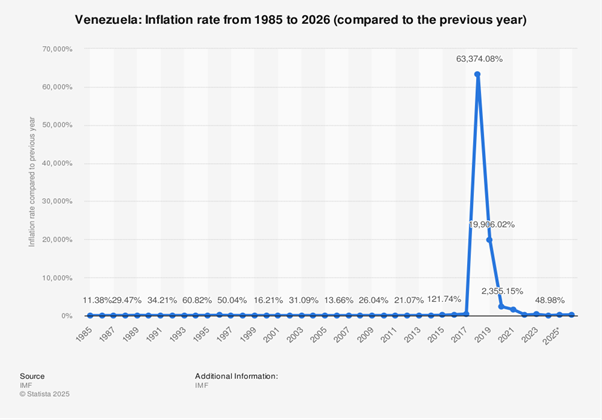
Venezuela’s Inflation rate, Statista
CONCLUSION
The sharp decline in world oil prices in 2014 marked a turning point. Venezuela's government spending did not decrease, despite the country's revenues seemingly falling in half overnight. Instead, the government borrowed from overseas and printed money to make up the difference. This marked the start of the debt trap : borrowing to pay off prior loans and maintain subsidy programs rather than to invest.
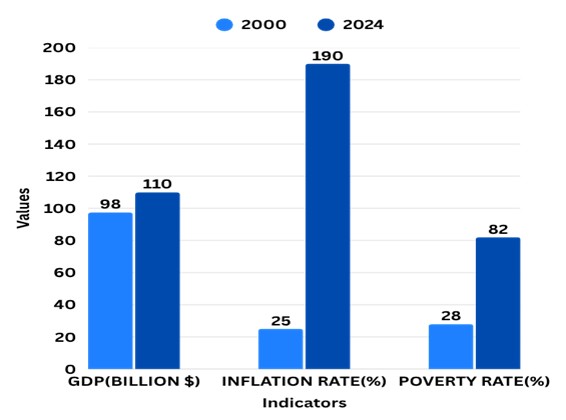
By 2019, Venezuela’s external debt was more than USD 150 billion, and foreign reserves had almost entirely vanished. The country defaulted on its international bonds and was effectively locked out of the global credit markets. Hyperinflation ensued, with prices increasing by more than 10 million percent according to the IMF. The bolívar was worthless, and the economy was over 70% smaller than it was in 2013.
External shocks alone cannot explain Venezuela's debt crisis. Political choices turned a small downturn into a full-blown economic disaster. Hugo Chávez's populist government focused on redistributing wealth rather than increasing productivity. His government didn't save oil windfalls (unearned, unexpected profits made by oil companies when global prices rise sharply) in a sovereign wealth fund (a state-owned investment fund that invests in real and financial assets). Instead, they borrowed money to pay for things that people in the country needed.
Monetary and fiscal mismanagement increased under Nicolás Maduro, the 46th President. The government enforced strict exchange rates, imposed price controls, and nationalized important industries. Foreign investment and private enterprise were crushed by these policies. State revenues fell as oil production fell, from 2.5 million barrels per day in 2013 to less than 800,000 by 2020.
Sanctions imposed by the United States after 2017 further restricted Venezuela’s access to global markets, but the structural weaknesses predated them. Years of corruption, inefficiency, and opaque accounting had already eroded trust in PDVSA and state institutions.
Venezuela’s various financial indicators
Source: Multiple
As traditional lenders withdrew, Venezuela turned east. China and Russia became its principal financial lifelines, offering loans and credit in exchange for oil. Between 2007 and 2018, China extended over USD 60 billion in resource-backed loans, to be repaid through oil shipments. This partnership temporarily postponed default—but effectively mortgaged Venezuela’s oil future.
Russia, meanwhile, provided military support and financial restructuring assistance through Rosneft (a Russian company specialising in exploration, extraction and other activities relating to petroleum and related goods), deepening geopolitical dependencies. These alliances offered short-term relief but entrenched the debt trap by replacing Western creditors with state-linked lenders seeking strategic influence. Thus, Venezuela fell further into the debt trap.
Venezuela’s economic collapse offers stark warnings for resource-dependent nations. As famously said, those who don’t read history are doomed to repeat it. As such, here are the key takeaways we should keep in mind:
1. Diversify the Economy
Countries that depend on a single commodity, like oil, are vulnerable to fluctuations in world prices. Widespread economic instability resulted from Venezuela's revenues plummeting when oil prices fell. Diversification among industries, including technology, manufacturing, services, and agriculture, can lessen vulnerability and offer more reliable sources of income.
2. Build Fiscal Buffers
Boom times are for saving, not spending. Venezuela was vulnerable when revenues declined because it had not built up reserves during periods of high oil prices. To protect against economic downturns and unexpected shocks, nations should keep emergency reserves, stabilization funds, or sovereign wealth funds.
3. Ensure Transparency and Accountability
Corruption and inefficiency are encouraged by opaque borrowing and poorly managed finances. Accountable institutions, independent auditing, and transparent public finance systems lower the possibility of debt abuse and increase public and investor trust.
4. Avoid Politicizing Fiscal Policy
Populist spending can temporarily appease citizens but often undermines long-term stability. Hyperinflation and fiscal collapse were caused in part by Venezuela's expansive social programs, which were financed by debt rather than steady income. It's critical to uphold discipline and evidence-based budgeting.
5. Balance Growth with Sustainability
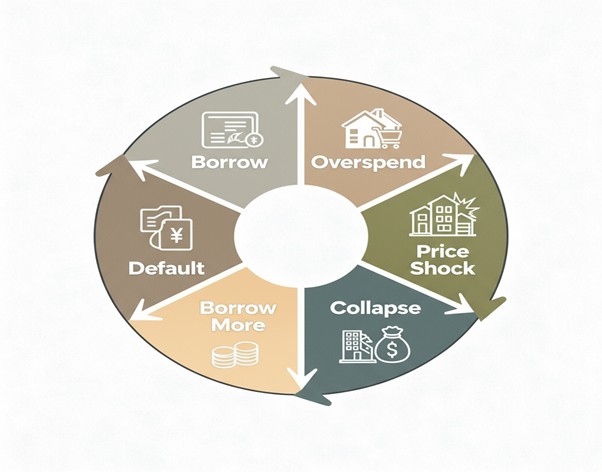
Although debt can be a useful instrument for growth and investment, excessive reliance on it can be harmful. By matching debt to profitable ventures and keeping debt-to-GDP ratios under control, sustainable borrowing practices help avert cycles of excessive spending, default, and economic collapse.
Venezuela Fuel exports (% of merchandise exports
Source: World Bank WDI and OPEC/IEA summaries
THE FALL: PROSPERITY TO CRISIS
POLITICAL DECISIONS AND ECONOMIC MISMANAGEMENT
ATTEMPTS AT RECOVERY AND FOREIGN INFLUENCE
LESSONS FROM VENEZUELA’S DEBT TRAP
Visual Representation of a Debt Trap