From Amway to boAt-Is Referral Marketing Still the Secret to Explosive Growth
By Aayushi Agrawal
2/4/20264 min read
“Nothing influences people more than a recommendation from a trusted friend.”
– Mark Zuckerberg.
Introduction
From Amway’s physical pitch to boAt’s social codes, referral marketing has helped many Indian brands grow quickly. Now that so many companies are competing, does word-of-mouth still help brands grow really fast, or is it just another way to get customers? This article looks at the Indian journey of referral marketing. It examines the offline networks of the 1990s(through Amway) and today’s digital community(through boAt).
Referral Marketing in India: The Evolution from Amway to boAt
Referral marketing is not just a business trick – it’s how people in India trust each other and make choices. It’s more about relationships than just rewards. The big Indian brands have found new ways, from selling through friends and family to using Instagram codes to get happy customers.
I. Amway and Direct Selling
When Amway arrived in India in the 1990s, it brought not just American products, but a new way to reach customers. Instead of advertising, Amway relied on personal connections – a vast multi-level marketing (MLM) system.
Business Practice:
Ordinary Indians signed up as “distributors”, selling directly to friends and family, using trust and people's influence.
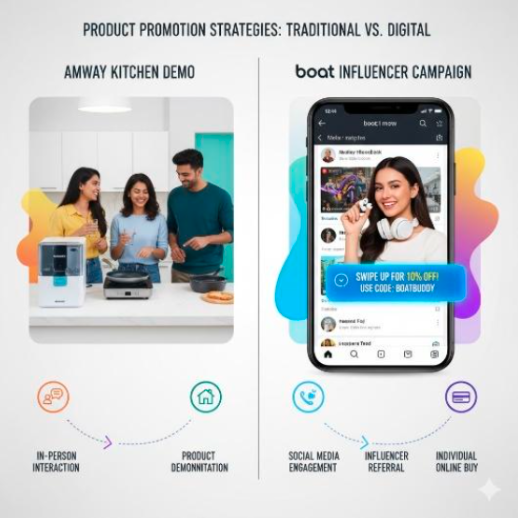
Physical product demos, home meetings, and persuasive one-on-one conversations built early trust.
Each distributor earned commissions both on their own sales and the sales of newly recruited members.
Market Data:
By 2015, Amway had over 550,000 active distributors in India, as the overall direct selling market in India reached $5.9 billion.
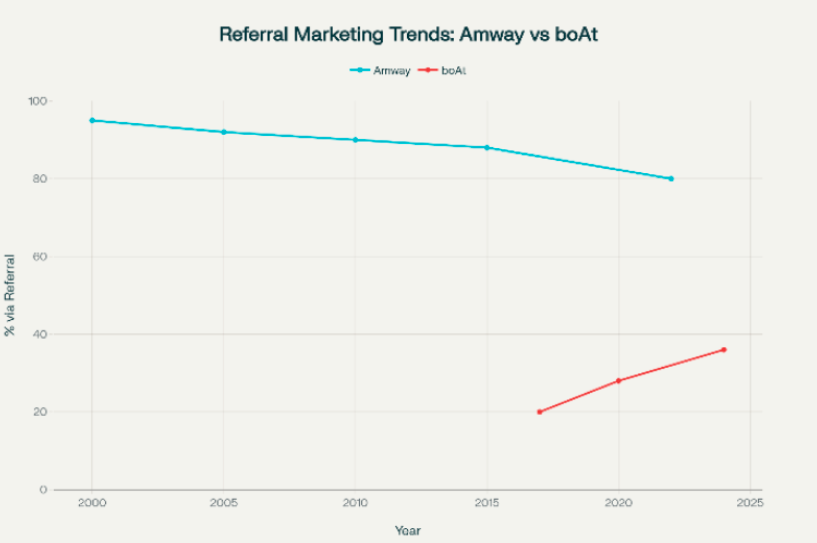
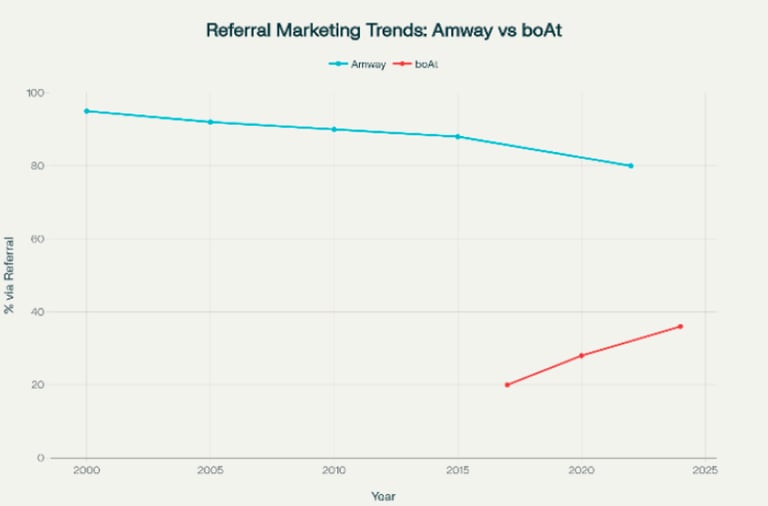
Most of Amway’s sales(about 80-95%) happened because people referred others, not because of regular stores. Lots of people kept buying and selling again and again, and this helped the company become popular and sell more.
Social Influence and Limitations:
MLMs flourished in India’s community-focused culture – family, neighbours, and friends trusted each other’s recommendations far more than advertisements.
For many, direct selling meant extra income and entrepreneurial status, especially in smaller towns.
However, challenges emerged:
Success depended on close relationships and continual networking.
In cities, when too many people started selling, people started to feel negative about these companies and wanted them to be more honest.
Amway had trouble with government rules because officials wanted to stop them from signing up new members just to grow the network, instead of focusing on selling products.
II. Digital Shift
The digital revolution changed how referrals work. By the late 2010s, e-commerce and app-based businesses started using referral codes – rewarding both senders and receivers with discounts, cashbacks, or points.
Industry Evidence:
Real estate referral platforms like Reloy generated ₹2,000 crore in referral-led sales across India in a single year.
These days, brands use WhatsApp, Instagram, and other social apps for referrals, so anyone can easily share and help the brand get more customers.
Impact on Amway and Direct Selling
Amway and similar companies changed by making websites, using apps, and teaching people how to sell online.
By 2022, there were 8.4 million people selling directly, and new sellers were joining faster than those in the old selling networks.
III. The boAt Era
Founded in 2016, boAt changed the headphone and gadget market in India, much of its growth thanks to innovative digital referral and influencer strategies.
boAt’s Playbook:
Customers receive referral codes upon purchase, redeemable for discounts or loyalty points when shared. Unlike Amway’s network-centric model, boAt leverages social validation: leaderboards, contests, and user-generated content on Instagram and YouTube.
The brand collaborates with micro-influencers and fan communities (“boAtheads”), who help spread the word by posting, reviewing, and sharing videos of opening new products.
Numbers That Matter:
About 30-36% of boAt’s new customers join through referral programs.
boAt’s keeps more customers (74% stay loyal) and spends less money getting them through referrals as compared to paid advertisements.
IV. Why Referral Marketing Still Works – Data and Trends
Getting customers through referrals is still cheap for brands, and people trust it more than other methods:
Referral programs drive 54% higher conversion rates and 35% more loyal customers than other methods
People in India listen more to reviews and influencer advice online, showing that trust is the main reason referrals succeed.
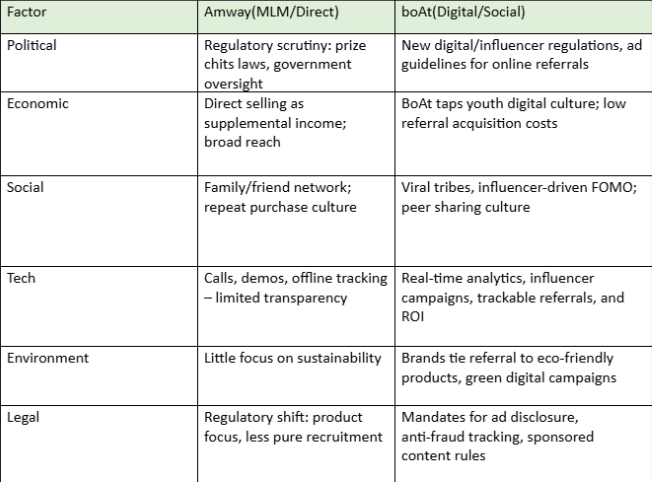
V. PESTEL Analysis
PESTEL Table: Amway vs boAt, India Referral Marketing
PESTEL drivers show why MLM models (Amway) flourished for decades, but also why digital referral (boAt) is better suited for current regulatory, social, and tech realities.
VI. Timeline – A Clear Evolution
1990s-2000s: Amway’s MLM Dominance
Amway grew by building trust, meeting people face-to-face, and showing products in person.
They started small and grew naturally over time.
2010s: Transition Period
Brands started using the internet – sending codes by email or SMS.
Growth slowed down in cities because a lot of people were selling, and new rules made it difficult.
2020s: Digital Referral and Social Tribe
boAt and similar brands use phones, social media, influencer networks, viral contests, and tracking tools to grow fast.
Referral codes can be shared over and over, reaching lots of people.
External factors (regulation, tech innovation, market saturation) help brands that focus on digital and online communities.
The success of boAt’s referral strategy has inspired other companies to try similar ideas. Companies are finding that digital word-of-mouth isn’t just about one-time rewards-it’s about keeping people excited and loyal. For example, boAt gives special deals to people who refer, gives extra points if they share again, and makes top fans feel important. This helps customers stick with the brand. When more brands compete, the ones that listen to customers and keep updating their referral programs will do better and get more attention.
VII. Conclusion
Referral marketing in India has evolved a lot– first, Amway used trust and demos, and now boAt uses social media. Data shows that referrals help brands get more customers, keep them longer, and save money – but this only works well for brands that are honest and ready to change when needed. As rules change and people start shopping differently, referral marketing will work best for smart, honest brands that keep improving how they connect with customers.
Figure 1. Trend in Referral-Driven Sales and User Acquisition (%), Amway (2000-2022) vs boAt (2017-2024).