
Entering the Modern Workplace: How Gen-Z is Shaping and Surviving It
By Vanshika Jain
1/29/20265 min read
“Work isn’t what you go to anymore, it’s what you grow through.”
But as Gen Z steps into this ever-changing space, are they shaping the workplace or surviving it?
Source- Forbes:How Gen Z Will Change Company Culture
Goodbye 9-to-5, Hello 24/7 Wi-Fi
Over several decades cubicles, commuting and coffee breaks have characterized the rhythm of the 9-to-5 life at work. To Gen-Z, though, the future of work is completely different, as the children born after 1997 and 2012 work radically differently. Growing up they lived in the world when Wi-Fi was used instead of filling cabinets, Slack ping was used instead of chatting in the water cooler. Work means a digital ecosystem to them.
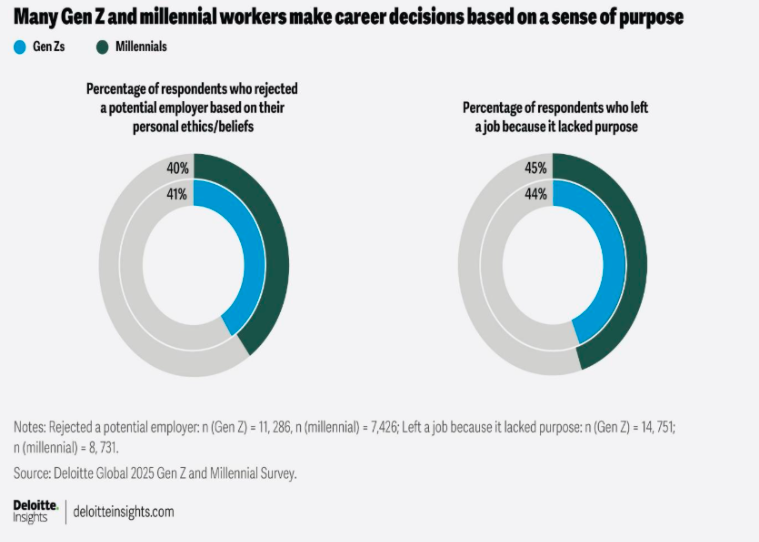
A study by the Deloitte 2025 Gen Z and Millennial Survey shows that 78% of Gen Z employees value flexibility and mental comfort over compensation compared to 75% this year. This change has been a redefinition of success: where previous generations pursued the idea of stability, the Gen Z generation is pursuing authenticity. They desire positions that are consistent with their values, have creative freedom and enable them to make a real difference even by changing jobs more often.
Consider the hybrid work system in Zomato India that will enabled the employees to work anywhere, spending long periods at home. It is not a benefit but an understanding of how digital-native employees excel when they are left to work on their own conditions. Even internationally, such companies as Google (flex work weeks 2025 update) and Shopify (remote-first policies 2025) keep having to adjust to these expectations (Statista, 2025).
But with this there is a paradox to this flexibility. The digital tools that Gen Z relies on, products that are considered empowering such as Slack, Notion, or Zoom, can also create a boundary between the office time and the off time. According to sociologist Jean Twenge, “Gen Z is the first generation to bring their entire social identity online and now, their work identity too” (Twenge, 2025)
Ctrl + Alt + Delete: Gen Z’s Way of Fixing Work
While the hustle is popularized by Millennials, Gen Z is Ctrl + Alt + Deleting on the outdated workplace norms. They are not anti-work; they just do not accept mindless things to do or places that do not conform to their values.
According to the LinkedIn 2025 Workplace Culture Report, 62 percent of Gen Z professionals would switch a job that does not match their own values, as opposed to 31 percent of Boomers. Diversity, mental well-being and purpose are necessary to this generation, and not optional.
However, it is not all about leaving jobs and making splendid gestures. The Gen-Z views work with different approaches, they demand to be balanced, they are concerned about real relations with their co-workers, and they appreciate working in environments where their ideas do count. They would like to work in the place, which will not disrespect their time, will not hinder their creativity, and will not make them feel involved in the process without becoming exhausted.
As one of the HR heads at Deloitte India noted “Gen Z is not anti-work. They’re anti-pointless work.” (Deloitte, 2025)
Essentially, this generation is not rebelling; they are redesigning the work experience and work practices around the priorities of purpose, belonging and balance rather than titles and the topically inflexible schedules.
Survival Mode: Thriving Amid the Chaos
Although Gen Z is transforming the workplace, this process does not always proceed without wrinkles. Stress along with burnout and uncertainty occur in many cases when young professionals juggle ambition and well-being. The modern day workplace is overwhelming with financial pressures, constant connectivity and the need to “perform online”.
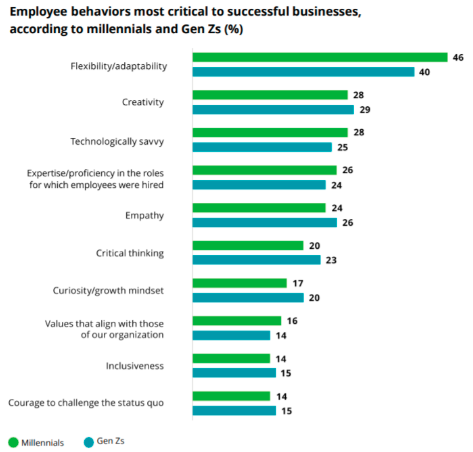
Source: Deloitte Global "2021 Millennial and GenZ Survey"
Gen-Z is improvising methods of safeguarding their emotional and mental wellbeing to overcome this. There are those that value flexibility in their working hours, workplace boundary, or engage in so-called portfolio careers, which are the integration of various interests. Others are also concerned with small victories and self-development, instead of pursuing the traditional indicators of success.
These needs are starting to be identified by companies. The workplaces of the future focus more on mental health programs, mentorships, and constructive feedback, as they allow employees to succeed without exhausting them. An example of it is Patagonia, which provides its workers with 18 hours of paid activism in annual terms, which they spend on community service and environmental projects (Patagonia, 2025)
It is not only about finding productivity, but also a long-term effort to maintain a satisfied, motivated, and strong workforce.
This ambition and self-care is creating a generation that is not just surviving in the modern workplace but trying to make it their own.
The communication culture within a workplace is being redefined by Gen-Z. They like authenticity, not formality and tend to use emojis and informal languages. Slack and Microsoft Teams encourage the informal and open dialog, which builds a feeling of belonging together.
Nevertheless, companies should attempt to overcome differences between generations to preserve order and cooperation. Frequent feedback loops and training have become normal to keep everybody on track.
Models of remote work and hybrid also underscore open and non-discriminating communication. One of the expectations of Gen Z employees is transparency and frequent check-ins. Firms such as Swiggy and Infosys are an example, and no-meeting Fridays, as well as nonstop feedback systems, make a difference to ensure that employees remain engaged, avoiding burnout.
From Reels to Real Talk: Communication in Gen Z Work Culture
Where Passion Meets Paycheck: The Gen Z Legacy
“Gen Z isn’t choosing between passion and paycheck; they’re redefining success to include both purpose and prosperity”
Gen Z is reshaping the work culture, wanting more than a job, it wants a purpose. Their vitality is leading to a change towards health, flexibility and genuineness.
Source: Verdict Working with Generation Z: A practical guide for managers
However, their impact extends much beyond policies and perks. They are changing the definition of success - a balance between personal development, purpose, and financial well-being. Gen Z opposes the old structure of hierarchy, promotes diversity, and enhances cross-generational collaboration.
Their values will be a place to work where people are appreciated and put above profits, purpose is placed above position, and well-being is placed above burnout. Those companies adapting to this change will develop creative, strong teams, and those that remain within the old structures may lose talent and innovation.
Gen Z is, in a way, showing older generations that work is not only efficient but also means, develops, and brings pleasure. They are not just living alongside the contemporary working environment; they are transforming it into a place characterized by creativity, teamwork, and goal.
Their ideals will be reflected in the workplaces of the future, a blend of technology, flexibility, and humanity in what the world is just starting to fathom.