
DECODED: Unpacking the buzzwords behind our screens
By Jaspreet Kaur
2/19/20265 min read
In today’s digital world, an individual’s phone often understands them better than their closest friends — not because it cares, but because it watches, learns, and predicts.
It’s a phrase one tosses around casually, half in jest. But does one know that behind a glowing screen and an endless scroll lies a silent economy? One that trades not in rupees or dollars, but in data, attention, and prediction!
Welcome to the invisible marketplace of algorithms, the secret puppeteers of the digital world. From deciding which song one will hum on the way to college to how much one will pay for the next flight to Goa, algorithms are quietly shaping choices, markets, and even moods.
This blog reveals the "secret puppeteers of the digital world," depicting algorithms as unseen forces that manipulate data and influence decisions.
THE SECRET MARKET OF RECOMMENDATIONS
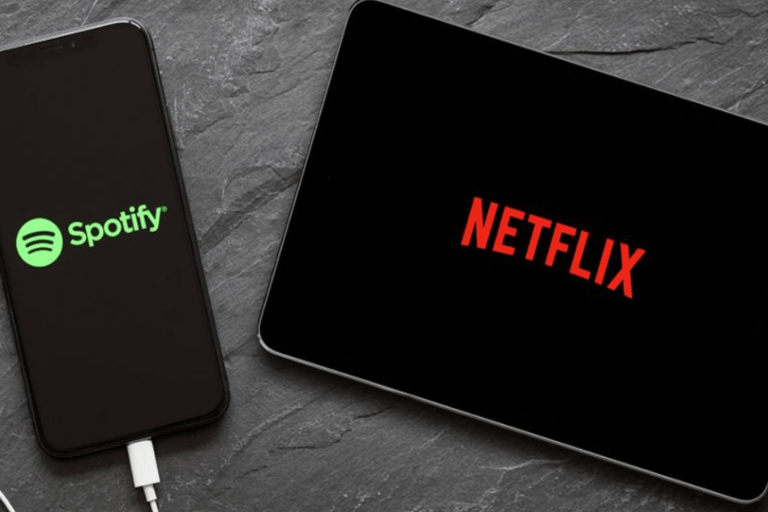
Think about TikTok. One swipe, and one is served a video so perfectly tailored, it feels almost psychic. Netflix whispers, “Because you watched Money Heist…” Spotify builds “Discover Weekly” playlist like an old friend who knows a erson’s 3 a.m. moods. But none of this is friendship — it's economics disguised as empathy.
Recommendation engines are built not to entertain, but to maximise engagement. Why? Because engagement means retention, and retention means revenue. The longer a person’s eyes stay on the screen, the more valuable they become in this algorithmic bazaar. The result? A subtle loop of attention capture that economists are beginning to reckon as the “Attention Economy.”
Every like, every skip, every pause, and every scroll is a data point, akin to a breadcrumb trail that feeds back into machine-learning systems, fine-tuned to predict one’s next move. These predictions are assets. After all, they determine advertising prices, content production budgets, and even the cultural zeitgeist itself.
Netflix doesn’t just recommend shows. It produces content based on algorithmic insight, often betting millions of dollars on what data says the world will binge on next. The result? Algorithms don’t just reflect our tastes; they end up manufacturing them.
DYNAMIC PRICING: WHEN YOUR UBER HAS A MOOD

If recommendation engines manipulate what we choose, pricing algorithms manipulate how much we pay.
Open your food delivery app during lunchtime rush, and prices mysteriously rise. Book a flight on a Friday night, and your fare magically inflates by morning. It’s not sorcery — it’s dynamic pricing.
Airlines, Uber, Zomato, and Amazon all deploy algorithmic pricing systems that transform costs in real time. The logic is pretty simple: charge more when demand is high, and less when it’s low. However, the implications are much profound.
These algorithms track a person’s urgency, their patterns, and even their device type. Studies have shown that Apple users often see slightly higher fares or hotel prices. Why? Because statistically speaking, they’re more likely to pay. This is algorithmic micro-discrimination, invisible yet precise.
Economists call this world of hidden valuations “shadow pricing”. This is essentially when the true price of a product is never printed, only calculated in secret. One may think that we’re in control when we click “confirm booking,” but in reality, the algorithm has already read the room and also our wallet.
THE ETHICAL DILEMMA OF ALGORITHMIC LENDING
If algorithms can influence entertainment and pricing, imagine their power when it comes to money.
Across India, fintech apps now offer instant loans based on digital footprints, from one’s transaction history to their social media activity. On the surface, this might seem revolutionary: faster credit, fewer forms, no bankers’ frowns. But underneath lies an ethical dilemma.
Algorithms are trained on data. And data reflects society’s inequalities. A person from a lower-income pin code, or someone without a digital spending history, might be flagged as “high risk.” That isn’t financial logic — it’s digital bias dressed up as mathematics.
In countries like the U.S. and China, algorithmic lending has already raised alarms. Borrowers have been denied credit due to patterns that had nothing to do with repayment ability, just the digital neighbourhoods they belonged to. India is next in line unless regulation catches up.
The ethical question is chilling: can we call a system fair if we don’t even know how it decides?
AI-DRIVEN CONSUMER MANIPULATION AND DARK PATTERNS
In the algorithmic economy, even freedom of choice is a beautifully crafted illusion.
Why do you click “Buy Now” seconds before the timer runs out? Why does your cart suddenly show “Only 2 items left”? Those aren’t coincidences — they’re dark patterns: deceptive design tricks that manipulate user behaviour.
Amazon, Swiggy, and countless e-commerce apps use urgency cues, nudging strategies, and interface biases to push purchases. These designs exploit the human brain’s shortcuts — fear of missing out, the comfort of defaults, the illusion of control.
When AI amplifies these manipulations at scale, it becomes something economists coin as “behavioural extraction”, the art of turning human psychology into commercial profit. The tragedy is that users believe they are making choices freely, while algorithms are quietly scripting every step.
THE BATTLE FOR ALGORITHMIC REGULATION
Europe has already begun to fight back. The EU’s Digital Services Act (DSA) and AI Act demand transparency: companies must explain how their algorithms influence users and ensure they don’t discriminate or deceive. In India, the Digital India Act (expected soon) aims to tackle dark patterns and algorithmic opacity, but regulation here remains a step behind innovation.
The challenge is enormous. How does one regulate something invisible, constantly learning, and privately owned? Demanding transparency from Big Tech is like asking a magician to reveal the trick; it ruins the act, and the business.
Yet without oversight, the algorithmic economy risks deepening inequality. The rich get personalised offers, the poor get predatory pricing. The tech-savvy exploit the system; the unaware are exploited by it.
The future of commerce depends on algorithmic accountability, not killing innovation, but making it ethical.
WHEN SMALL BUSINESSES ENTER THE ALGORITHM GAME
It’s not just the tech giants anymore. Small and medium businesses in India are beginning to harness the power of algorithms, too.
A Jaipur handicraft seller using Instagram Reels to reach foreign buyers. A Delhi café using AI-driven loyalty data to personalise offers. A small fashion brand predicting demand through search analytics. These are stories of algorithmic empowerment — where data becomes the great equaliser.
Tools like Google Ads, Shopify analytics, and AI-based CRM systems allow even a local business to understand its consumers like never before. The future will reward not the biggest, but the smartest — those who can use algorithmic tools with creativity and conscience.
CONCLUSION- THE INVISIBLE HAND HAS GONE DIGITAL
Adam Smith once spoke of the “Invisible Hand” that guides markets. Today, that hand is no longer human. It’s algorithmic, coded by engineers, powered by data, optimised for profit.
The question that faces us, as consumers, entrepreneurs, and citizens, is whether we let algorithms define us or demand that to explain themselves.
The hidden economics of algorithms is not just about efficiency or profit. It’s about power, who holds it, who understands it, and who gets left behind.
In the coming years, every aspect of commerce, from what we watch, buy, eat, and borrow, will be shaped by invisible equations. But the story doesn’t have to end in manipulation or monopoly. With awareness, regulation, and ethical design, algorithms can become allies, not masters.
Because the ultimate algorithm of a fair economy should still have one line of human code at its heart — conscience.