
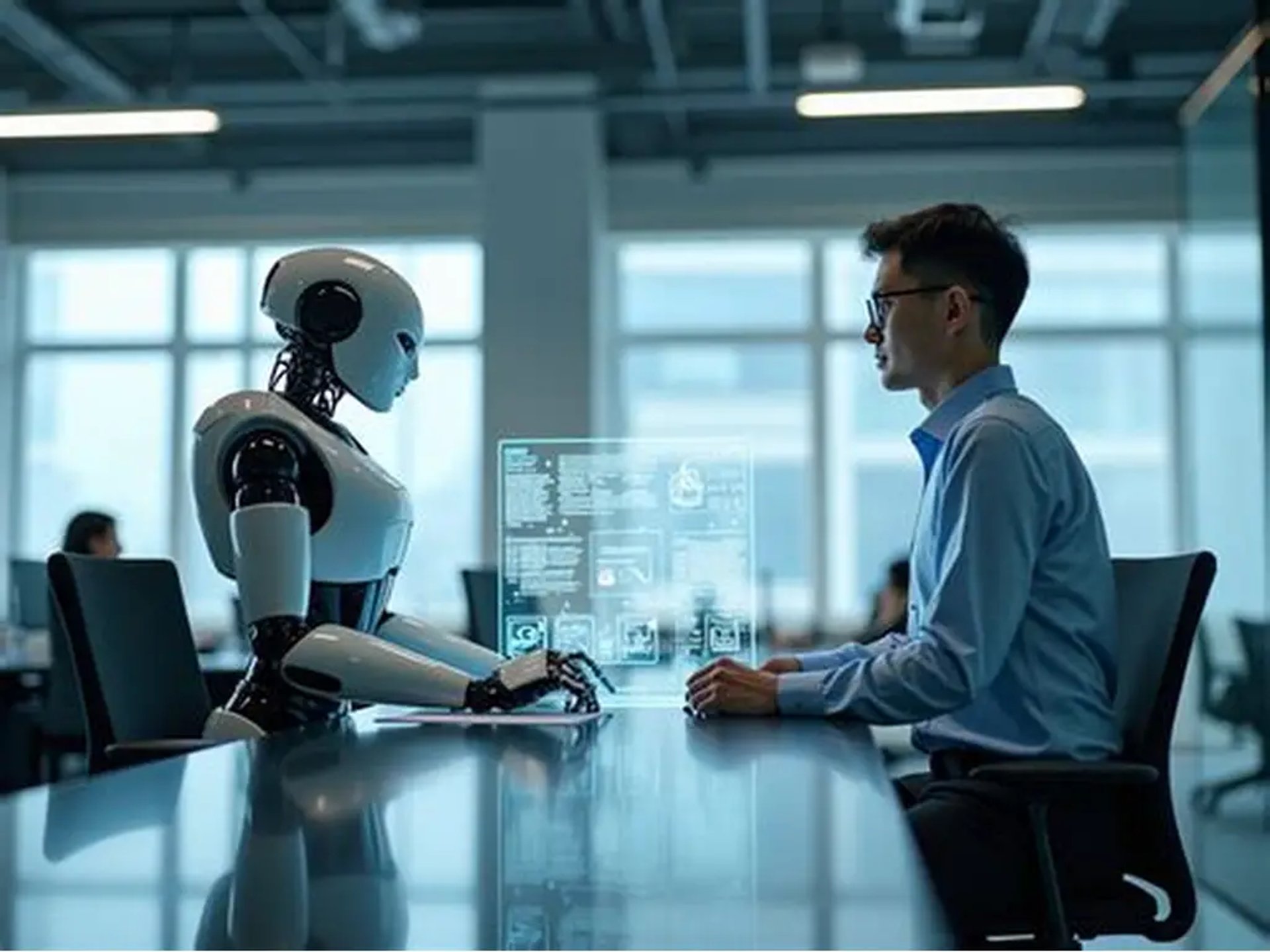
AI and Automation in Commerce” Will Accountants and Managers be Redundant?
By Kishan Kumar Sharma
4/10/20264 min read
INTRODUCTION
“Ai is either the best thing or the worst thing happen to humanity” - Stephen Hawking
There has been a rapid increase in the use of artificial intelligence that has produced a spark of transformation in various industries .These things on one side symbolise efficiency and cost savings on the other hand they never feel short of raising concerns about the redundancy in traditional roles that are accounting and management.
From automatic bookkeeping through software’s like tally prime to predictability analysis by AI, AI is slowly becoming an indispensable tool.These advancements promise unparalleled efficiency accuracy and cost effectiveness,that allows organisations to optimise processes that were labour extensive in earlier times.
Despite these concerns the AI doesn’t simply signal obsolescence ,rather it represents a shift in the pattern of work ,where the people who are working would have to think and reproach about their traditional approach.
The following article will delve into the implications of AI and automation on these professions,exploring both the challenges and opportunities they present.
The rise of AI and Automation in commerce
AI and automation technology have revolutionised the way the businesses operate .In accounting the tasks such as Data entry ,reconcilable of banking statements making trail balances are being easily done by Ai ,that are leading to a very faster and cost effective approach,AI driven tools assist in decision -making ,forecasting,and resource allocation ,enabling managers to focus on strategic initiatives rather than routine tasks .
Albeit,there large use has led concerns about unemployment.There was a study done by AccountsIq found that 23% of the senior professionals of finance are petrified of the notion that the AI would take over their jobs ,as 24% of the companies have started hiring new technologies.On the contrary 41% of the senior professionals believe Ai will transform their ability to add values to their businesses ,while 24% feel AI will help them save time and increase efficiency.Many finance workers(96%) also believe automation will help mitigate errors in manual processes ,with 30% of senior professionals and 28% of junior professionals attributing errors specifically to a lack of automation.
IMPACT ON ACCOUNTING PROFESSIONALS
AI’s role in accounting is having many facets .On one hand ,it helps in automating repetitive tasks ,that reduces the need for manual intervention.On the other hand ,it enhances the ability of accountants by providing them with technical skills that helps them in doing advanced analysis ,tools and insights .
According to the journal of accountancy Intelligent Process Automation (IPA) enables accounting firms to automate complex ,multistage processes like financial close procedures and tax compliance workflows rather than merely discretion them.
Despite these advancements, the human role remains crucial .As noted by Intregrabalance ,AI is a powerful ally that complements financial decisions but making the human judgements,ethical guidance ,and strategic thinking will always be essential .It is also said by ACCA insight that The accountant of the future will not only process numbers but also analyse and provide insights that drive decisions.
IMPACT ON MANAGEMENT ROLES
In management ,AI and automation are reshaping the decision making processes .vast amount of data are analysed by managers and useful insights that were previously unattainable that are leading to informed and timely decisions .
However the role of managers is evolving rather than disappearing .A report by Pwc indicates that junior accountants and managers ,within three years ,will take on responsibilities traditionally held by mid-level managers ,such as reviewing and supervising AI systems that now perform more routine and starting level of audit tasks .
The manager of PwC has said “Three years from now ,we will feel like the first three years managers are functioning more than the manager of my day”
Kolar said that now they are adopting training sessions for their employees ,adding that entry -level workers have to know how to review and supervise the AI’s work.
ADDRESSING THE REDUNDANCY CONCERNS
While AI and automation may render certain tasks obsolete,they also create new opportunities.The automation of routine tasks helps the working people to engage in more strategic activities like analysis planning and client interaction.
There has been a skyrocketing Increase in AI literacy in the previous 3-4 years .Accountants and managers who embrace these technologies and acquire the necessary skills will find themselves better positioned in the evolving job market .As it was highlighted by the International Federation of Accountants,embracing the role of AI and automation and it allows room for professionals to focus on delivering meaningful insights to guide decision making .
Many companies are investing in digital transformation based on intelligent automation to drive exponential business growth ,meet customers expectations and enable people to focus on their human strengths to create greater fulfilment.
Pascal Bornet a CPA and Ai and automation leader at EY and McKinsey presented on the opportunities lying with us that AI and intelligence automations provide to work better ,augment human decision making and increase job satisfaction.
Pascal introduced a 4 capabilities framework for achieving intelligent automation with different technologies and tools to mimic human interaction with computers,namely Vision ,Execution,language and thinking and learning .When computers first came, it was feared that it’s going to take jobs away. When calculators first came, it was feared that it’s going to take jobs away. ATMs came, it was feared that it’s going to take jobs away. What happens is, it does take jobs away from some people and then transfers them to other people. If you’re positioned properly, it’s an opportunity.
CONCLUSION
The emergence of Artificial Intelligence and automation in business is not just a technological transformation. It is a revolutionary tide restructuring the very nature of working life. Managers and accountants, who were earlier mostly involved in repetitive, mundane work, are now standing at the juncture where old ways meet new. Whereas AI tools and automation software add efficiency, speed, and precision to bookkeeping, payroll, and forecasting, they lack the vim and vigor with which human professionals undertake interpretation, judgment, and moral decision-making.
By adopting technology as a partner, not a rival, professionals can raise the game of their contributions to bring more insightful understanding and better-informed decisions.
Furthermore, the future belongs to those who continue to adapt, learn, and evolve. Upskilling in AI literacy, data analytics, digital strategy, and technological oversight empowers human professionals to excel, making their experience and judgment irreplaceable. Essentially, AI maximizes human potential rather than reduces it, enabling accountants and managers to combine the accuracy of machines with the creativity and passion of human minds.
In short, commerce is changing, yet human interaction remains at its core. Experts who embrace this change with vigor, enthusiasm, and energy will not merely endure but thrive, illustrating that technology and humanity can exist together in harmony, building workplaces that are both efficient and deeply human